
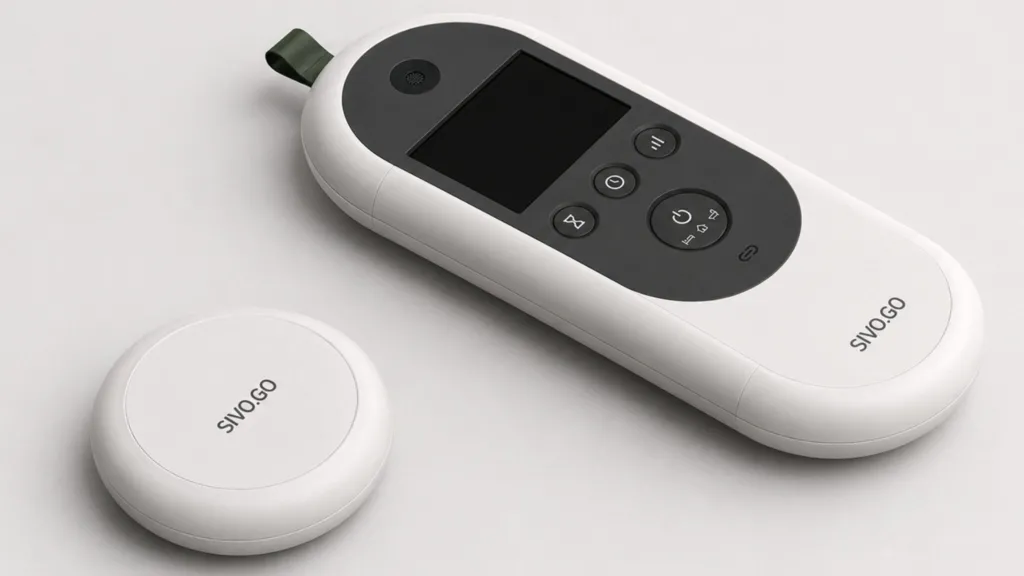
A graduate who developed a sensory alarm for people who are deaf and hard-of-hearing has won this year's UK James Dyson Award. Inspired by her own experiences in hotels, Gargi Agrawalla, who was born profoundly deaf, invented SIVO.GO for her final-year project at Loughborough University.
It uses artificial intelligence to recognise fire alarms and doorbells, without Wi-Fi or cloud processing, and can also detect knocks and door movement. Alerts are communicated through colour-coded lights, screen symbols and haptic vibrations. Rumyana Dancheva, lead design engineer at Dyson, said the device was a "brilliant example of a simple solution to a complex problem".
Agrawalla, 23, who studied product design, said winning the prestigious award was "immensely rewarding", adding it gave her confidence the problems she had experienced in hotels are "important and the idea has real potential". Agrawalla said emergency alarms, doorbells and room signals are "not always visual, tactile or accessible" in hotels and unfamiliar places. She added when hearing devices are removed for sleeping or showering, there are "off-device" gaps where key alerts could be missed.
Agrawalla, who uses a cochlear implant - a small electronic device that can be used by people with severe hearing loss who cannot use a hearing aid - said winning the national award "means a great deal to me".
She added: "SIVO.GO started from my own experience of being deaf and wanting to feel safer and more independent when I am not wearing my cochlear implants. "This recognition gives me the confidence and support to take SIVO.GO beyond a university project and develop it into something that could genuinely help other deaf and hard-of-hearing people.
"My next step is to refine the technology, continue testing with users and explore how it could become a real product that people can rely on in everyday life." The designer is no stranger to winning competitions. Last year, she created jewellery for use with hearing devices, which was made for production.
Prof Nick Jennings, vice-chancellor and president at Loughborough University, said the national recognition was a "tremendous achievement" for Agrawalla. "It highlights the potential for student ideas to have real-world impact," he said. "We are incredibly proud of Gargi and delighted to see her talent and ingenuity recognised with this prestigious award. "SIVO.GO is a fantastic example of what can happen when excellent design is combined with lived experience and a determination to solve a genuine real-world problem." Jennings added he looked forward to seeing how the product develops.
'Empathetic approach'
The James Dyson Award, now in its 21st year, is an international competition that aims to inspire and celebrate the next generation of design engineers. As the UK winner, Agrawalla received £5,000 to support the next stages of the prototype. Dancheva, who was on the UK judging panel and chose the winning design, said: "Gargi has immersed herself in this project from start to finish, bringing invaluable insights to the table through her own experiences as a user.
"What stood out most was the empathetic approach that shaped every stage of Gargi's design journey. "Innovation is not a straight path, so it was particularly compelling to see Gargi openly share both the successes and setbacks that helped shape SIVO.GO. "I am excited to see how the project continues to evolve, and I wish Gargi the best of luck in the future."
Two national runners-up were also chosen alongside the winners from 28 countries, and an international shortlist of 20 will be selected by a panel of Dyson engineers next month. Sir James Dyson will then select an international and sustainability winner on 4 November, with both being awarded £30,000.


